Print-on-Demand Case Study: How I Built a $5,000/Month T-Shirt Business With Zero Inventory

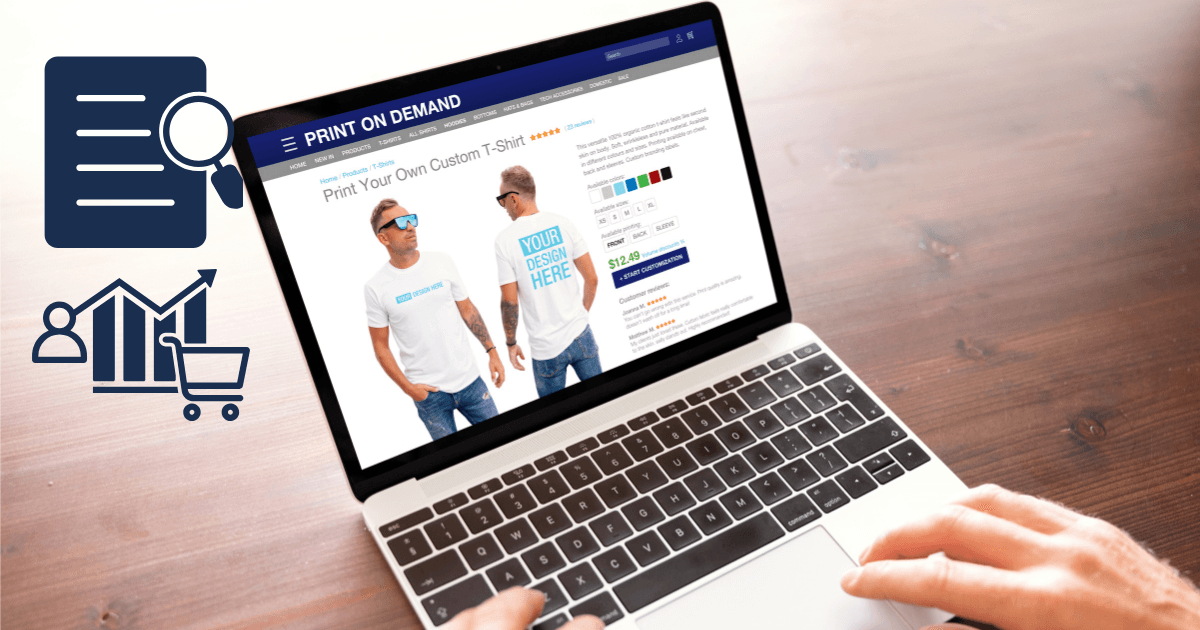
A person uses a laptop displaying a print-on-demand website, featuring custom t-shirts. Icons of a document, graph, and shopping cart are overlaid on the left—perfect for illustrating a print-on-demand case study.

In early 2023, I found myself at a crossroads. Despite my psychology degree and stable job, I felt unfulfilled and constrained by the traditional career path. The entrepreneurial itch had been growing stronger, but like many aspiring business owners, I faced two significant barriers: limited startup capital and the risk of inventory.

That’s when I discovered the print-on-demand (POD) business model—a system that would allow me to create and sell custom t-shirts without holding any inventory. Eighteen months later, my POD t-shirt business generates over $5,000 in monthly profit with virtually no overhead costs beyond my time and marketing expenses.

In this comprehensive case study, I’ll walk you through my entire journey—from initial concept to $5,000 in monthly income—and provide the exact framework I used to build a sustainable, scalable business with zero inventory risk.
Man with laptop, EWP shirt, and money icons beside text promoting free online business training, AI tools, website hosting, and community support. “Get Your Free Starter Access” is highlighted in yellow at the bottom.

The Print-on-Demand Opportunity

Before diving into my specific strategy, let’s address the viability of print-on-demand in today’s market. According to recent data from StartStory, the global POD market has reached $45.7 billion, with successful businesses achieving gross margins of up to 90%.

However, it’s also important to acknowledge the challenges. As noted in discussions on Reddit, less than 1% of print-on-demand store owners make enough to support themselves full-time. The average first sale can take approximately six months, and competition continues to increase.

Despite these challenges, I was convinced that with the right strategy, I could position myself among the successful minority. Here’s exactly how I did it.

Phase 1: Research and Niche Selection (Months 1-2)

The first critical decision was choosing a profitable niche. Rather than creating generic designs for a broad audience, I spent two months conducting intensive market research to identify an underserved segment with specific needs and strong purchasing intent.

The Niche Selection Framework I Used:

  1. Passion + Profit Analysis: I created a matrix listing my personal interests alongside market demand indicators.
  2. Competition Assessment: For each potential niche, I evaluated existing offerings on platforms like Etsy, Amazon, and Instagram.
  3. Trend Analysis: Using Google Trends, I identified niches with consistent or growing search volume.

After analyzing 15 potential niches, I settled on “psychology-inspired apparel for mental health professionals.” This niche leveraged my background in psychology while targeting a professional audience with disposable income and a strong group identity.

Why This Niche Worked:

  • Specific target audience: Licensed therapists, counselors, and psychology students
  • Professional connection: My background gave me credibility and insight
  • Limited competition: Most existing designs were generic or unprofessional
  • Strong community: Mental health professionals are active in online communities
  • Gift potential: These products could be purchased as gifts for colleagues

Phase 2: Platform and Provider Selection (Month 3)

With my niche defined, I needed to select the right platforms and providers for my business. This decision would impact everything from product quality to profit margins.

Platform Decision:

After researching multiple options, I chose to build my own Shopify store rather than selling on marketplaces like Etsy or Amazon. This decision was based on:

  1. Brand control: Ability to create a cohesive brand experience
  2. Customer ownership: Direct access to customer data for remarketing
  3. Margin protection: Avoiding marketplace fees (15-20% on most platforms)

I ordered samples from five leading print-on-demand providers: Printful, Printify, SPOD, Gelato, and Gooten. Each provider was evaluated based on:

  • Print quality
  • Color accuracy
  • Fabric feel
  • Shipping times
  • Integration capabilities
  • Pricing structure

After testing, I selected Printful as my primary provider for its superior print quality and reliable shipping, despite slightly higher costs. For certain specialty products, I used Printify’s network of print providers to access unique items not available through Printful.

Phase 3: Design Development and Product Creation (Months 3-4)

With my platform and providers selected, I focused on creating designs that would resonate with my target audience. Rather than producing hundreds of mediocre designs, I focused on creating 25 high-quality, niche-specific designs.

My Design Strategy:

  1. Professional-grade design: I invested in Adobe Illustrator skills and hired a professional designer for complex concepts
  2. Inside jokes and terminology: Created designs featuring psychology terms and concepts familiar to professionals
  3. Ethical considerations: Avoided designs that might trivialize mental health conditions
  4. Multiple variations: Each concept was adapted into 3-4 color schemes and styles

Product Selection:

Rather than offering every possible product, I focused on high-margin items with proven demand:

  • Premium unisex t-shirts (Bella+Canvas 3001)
  • Women’s fitted tees
  • Crewneck sweatshirts
  • Coffee mugs
  • Tote bags

Each product was selected based on margin potential, popularity among my target demographic, and consistent print quality.

Phase 4: Store Setup and Optimization (Month 5)

With designs and products ready, I built a professional Shopify store optimized for conversions. Key elements included:

Technical Setup:

  • Domain name: Purchased a professional, niche-relevant domain
  • SSL certificate: Ensured secure browsing
  • Mobile optimization: Tested across multiple devices
  • Page speed optimization: Compressed images and minimized plugins

Store Design Elements:

  • Professional theme: Invested in a premium Shopify theme ($180)
  • Brand identity: Created a cohesive color scheme and typography
  • Product photography: Used high-quality mockups with lifestyle images
  • Trust indicators: Added professional credentials and an about page

Conversion Optimization:

  • Simplified navigation: Created intuitive category structure
  • Product descriptions: Wrote detailed, benefit-focused descriptions
  • Social proof: Added review functionality
  • Checkout optimization: Reduced form fields and added trust badges

Phase 5: Launch and Initial Marketing (Month 6)

With everything in place, I launched the store and implemented my initial marketing strategy. Rather than relying on paid advertising immediately, I focused on organic growth and community building.

Launch Strategy:

  1. Pre-launch list: Built an email list of 250 potential customers through a coming-soon page
  2. Launch discount: Offered 20% off for the first 50 customers
  3. Personal outreach: Contacted former colleagues and classmates in the psychology field
  4. Professional groups: Shared in relevant Facebook groups and LinkedIn communities

Initial Results:

  • First month sales: $1,250 (47 orders)
  • Average order value: $26.60
  • Profit margin: 32% ($400 profit)

While these numbers were modest, they validated the concept and provided valuable customer feedback.

Phase 6: Scaling Through Strategic Marketing (Months 7-12)

With proof of concept established, I implemented a multi-channel marketing strategy to scale the business. Each channel was selected based on where my target audience spent their time online.

Instagram Strategy:

I created a niche Instagram account posting psychology humor, insights, and product features. Growth tactics included:

  • Daily posting schedule
  • Engagement with relevant hashtags
  • Collaborations with psychology influencers
  • User-generated content featuring customers wearing products

Results: 15,000 followers within six months, driving approximately 30% of total sales.

Facebook Advertising:

I developed a targeted Facebook ad strategy with a modest initial budget of $10/day, focusing on:

  • Lookalike audiences based on existing customers
  • Interest targeting (psychology, therapy, counseling)
  • Retargeting campaigns for store visitors
  • Dynamic product ads

Results: 3.2x ROAS (return on ad spend) after optimization, eventually scaling to $50/day.

Email Marketing:

I built an email marketing system using Klaviyo, implementing:

  • Welcome sequence for new subscribers
  • Abandoned cart recovery (recovering 15% of abandoned carts)
  • Post-purchase follow-up requesting reviews
  • Weekly newsletter with psychology content and product features

Results: Email marketing contributed 25% of total revenue by month 12.

Phase 7: Optimization and Scaling (Months 13-18)

In the final phase, I focused on optimizing every aspect of the business to reach and maintain the $5,000/month profit target.

Product Line Expansion:

Based on customer feedback and sales data, I expanded into:

  • Premium hoodies (higher price point, better margins)
  • Professional accessories (ID badge holders, notebook covers)
  • Seasonal collections (graduation gifts, conference apparel)

Operations Optimization:

  • Automated customer service with templated responses
  • Created standard operating procedures for all business processes
  • Implemented analytics tracking for data-driven decisions

Results Breakdown (Month 18):

  • Monthly revenue: $15,000
  • Cost of goods: $6,000
  • Marketing expenses: $2,500
  • Software/tools: $150
  • Miscellaneous expenses: $350
  • Net profit: $6,000

Key Success Factors and Lessons Learned

Looking back on my journey from concept to $5,000+ monthly profit, several factors were critical to success:

1. Niche Specificity

Unlike many POD sellers who target broad audiences with generic designs, my focus on a specific professional niche allowed for:

  • Higher conversion rates (4.2% vs. industry average of 1-2%)
  • Lower customer acquisition costs
  • Stronger word-of-mouth marketing
  • Repeat purchase behavior (43% of customers made multiple purchases)

2. Quality Over Quantity

Rather than racing to list hundreds of designs, I focused on creating fewer, higher-quality products that:

  • Commanded premium pricing
  • Generated positive reviews (4.8/5 average rating)
  • Resulted in higher customer satisfaction
  • Created organic social sharing

3. Brand Building vs. Product Selling

Instead of positioning as a t-shirt seller, I built a brand that psychology professionals identified with. This approach:

  • Reduced price sensitivity
  • Increased customer loyalty
  • Created opportunities for expansion
  • Differentiated from commodity sellers

4. Data-Driven Decision Making

Data guided every aspect of the business:

  • A/B testing product descriptions increased conversion by 23%
  • Email subject line testing improved open rates by 31%
  • Ad creative optimization reduced acquisition costs by 42%
  • Inventory planning based on seasonal demand patterns

Common Challenges and How I Overcame Them

Challenge #1: Print Quality Inconsistency

Early on, I received several complaints about variations in print quality. To address this:

  • Switched to premium blank products (Bella+Canvas instead of Gildan)
  • Established relationships with specific print facilities
  • Created detailed quality standards for providers
  • Implemented a no-questions-asked replacement policy

Challenge #2: Shipping Delays

During peak periods, shipping delays threatened customer satisfaction. My solutions:

  • Added prominent shipping time expectations on product pages
  • Implemented automated shipping delay notifications
  • Offered discount codes for affected customers
  • Diversified print providers by geographic region

Challenge #3: Design Theft

Competitors copied several of my best-selling designs. To combat this:

  • Registered copyrights for top designs
  • Implemented watermarking on product images
  • Diversified with new designs regularly
  • Built brand loyalty beyond individual designs

How to Apply This Framework to Your Own POD Business

If you’re inspired to start your own print-on-demand business, here’s my recommended framework:

Step 1: Find Your Niche

  • Identify 5-10 potential niches that interest you
  • Research competition and market size for each
  • Select a niche with passionate followers and specific needs
  • Validate through small-scale testing before full commitment

Step 2: Build Your Foundation

  • Select quality-focused print providers
  • Invest in professional design (skills or outsourcing)
  • Create a branded shopping experience
  • Establish systems for customer service and operations

Step 3: Implement Strategic Marketing

  • Focus on platforms where your niche audience congregates
  • Build content marketing that provides value beyond products
  • Use paid advertising strategically, not as your primary channel
  • Develop email marketing for customer retention

Step 4: Optimize and Scale

  • Use data to guide product development
  • Test and optimize every aspect of your business
  • Reinvest profits into growth opportunities
  • Consider expanding to complementary products and niches

The Future of Print-on-Demand

As I look to the future, several trends will impact the print-on-demand landscape:

  1. Sustainability focus: Eco-friendly materials and production methods will become competitive advantages
  2. Personalization technology: Advanced customization options will create new opportunities
  3. AI-generated designs: Machine learning will transform design creation and testing
  4. Augmented reality shopping: Virtual try-on experiences will reduce purchase hesitation

I’m actively adapting my business to these trends while maintaining the core principles that drove initial success.

Conclusion: The Real Opportunity in Print-on-Demand

The print-on-demand model offered me something invaluable: the ability to build a profitable business with minimal financial risk. While the journey required significant time investment and strategic thinking, the zero-inventory approach eliminated the major risks that prevent many entrepreneurs from taking the first step.

Today, my $5,000+/month business continues to grow while requiring less than 20 hours per week of active management. The systems and processes I’ve built create a sustainable income stream that aligns with my values and leverages my unique background.

The print-on-demand opportunity remains viable, but success requires a strategic approach focused on niche markets, quality products, and brand building. For those willing to put in the work, the reward is a business model that combines creative fulfillment with financial freedom—all without the burden of inventory management.


Have you experimented with print-on-demand or other zero-inventory business models? What challenges or successes have you experienced? Share your thoughts in the comments below.


Leave a Reply

Your email address will not be published. Required fields are marked *