💰 Make Money Online
🤖 AI & Future Opportunities
✍️ Content & Audience Growth
📈 Marketing & Sales
🛠 Products & Services
🧠 Foundations & Mindset
🏆 Real-World Proof

💰 Make Money Online
🤖 AI & Future Opportunities
✍️ Content & Audience Growth
📈 Marketing & Sales
🛠 Products & Services
🧠 Foundations & Mindset
🏆 Real-World Proof

Three years ago, I found myself answering client emails at 11 PM on a Saturday while my family watched a movie in the next room. I was making good money but barely experiencing my own life. My business was thriving, but I was burning out.
That wake-up call forced me to develop systems—not just good intentions—to create actual boundaries between work and personal life. Since implementing these systems, I’ve increased my revenue by 32% while working fewer hours and taking six weeks of completely disconnected vacation annually.
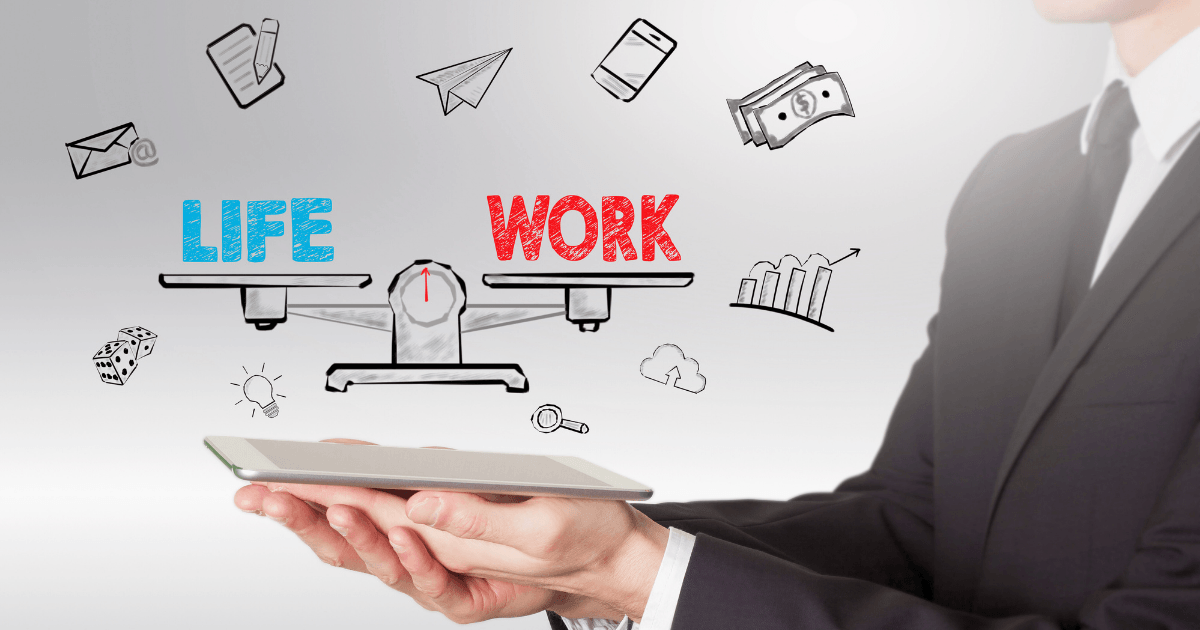
This isn’t about “work-life balance”—a concept that implies perfect equilibrium that rarely exists for entrepreneurs. Instead, it’s about creating intentional boundaries that protect both your business performance and your personal wellbeing.
Before diving into solutions, let’s understand what’s at stake. According to research from Go1, people who consistently work more than 55 hours weekly are:
Beyond health impacts, boundary-free work creates:
The irony? The entrepreneurs who insist they’re “too busy” for boundaries are often the ones who would benefit most from them.
After years of refinement, I’ve developed a four-layer system that creates effective work-life boundaries without sacrificing business success:
Let’s break down each layer with specific implementation steps.
Digital boundaries are the foundation because technology is often the biggest boundary-breaker. Here’s my system:
Implementation:
The System in Action: I maintain three email accounts: business, personal, and newsletters. My business email is only accessed during designated work hours, and I use Boomerang to schedule any after-hours emails to send the next business day. This prevents clients from expecting immediate responses outside work hours.
Implementation:
The System in Action: I initially tried using dual SIMs and separate profiles but found it too easy to “just check” work messages. Having physically separate devices creates a much stronger boundary. My business phone stays plugged in at my desk when work hours end.
Implementation:
The System in Action: I use iOS Focus modes to create different notification environments. During work hours, personal notifications are muted. During family time, work notifications are blocked completely. This prevents the constant context-switching that drains mental energy.
Physical space powerfully influences your mental state. Here’s how I create physical separation:
Implementation:
The System in Action: My office has a “Do Not Disturb” sign that family members respect during work hours. When I leave at day’s end, I completely clear my desk, write tomorrow’s top three priorities on a notecard, and shut the door. This physical separation helps my brain register that work is done.
Implementation:
The System in Action: This might sound trivial, but changing clothes creates a powerful psychological boundary. I dress professionally (from the waist up at least!) for work hours, then change into casual clothes when work ends. This simple habit signals to my brain that roles have shifted.
Implementation:
The System in Action: Without a physical commute, I created an artificial one. My 15-minute morning walk helps me mentally prepare for work, while my evening walk helps me decompress and transition to family time. These walks have become non-negotiable parts of my day.
Time boundaries define when work happens and—more importantly—when it doesn’t.
Implementation:
The System in Action: I communicate these hours to clients and team members and stick to them consistently. The buffer zones prevent work from bleeding into personal time. Friday is reserved for focused work without the interruption of meetings, allowing me to end the week with a clean slate.
Implementation:
The System in Action: My calendar includes blocks for workouts, family dinner, and personal projects—and these are treated as non-negotiable as client meetings. I use Calendly to ensure clients can only book during my designated meeting hours (10 AM – 4 PM Monday-Thursday).
Implementation:
The System in Action: When I’m on vacation, my auto-responder doesn’t just say I’m away—it explains that I have no access to email, provides emergency contact information for my assistant, and states when I’ll return and process messages. This eliminates the temptation to “just check in.”
The final layer addresses the most challenging boundary—the one in your mind.
Implementation:
The System in Action: My end-of-day ritual includes writing down any unfinished thoughts or tasks on tomorrow’s list, clearing my desk completely, and saying aloud: “Work is complete for today.” This verbal declaration helps my brain accept that work thoughts can wait until tomorrow.
Implementation:
The System in Action: When work concerns pop up during personal time, I quickly jot them in my “worry notebook” and remind myself I have a scheduled time to address them tomorrow. This prevents business concerns from hijacking family time or sleep.
Implementation:
The System in Action: I use the Calm app for a 10-minute transition meditation between work and personal time. This helps clear my mind and be more present for whatever comes next, whether that’s family dinner or personal projects.
Creating effective boundaries doesn’t happen overnight. Here’s how to implement this system gradually:
Even with systems in place, maintaining boundaries requires ongoing effort. Here’s how I handle common challenges:
Challenge: Clients or team members who expect immediate responses at all hours
Solution: I created a “quick question policy” that I share with all clients and team members. It explains that quick questions during non-work hours actually disrupt workflow and provides alternatives:
Challenge: Feeling guilty about not being constantly available
Solution: I maintain a “boundary benefits log” where I document positive outcomes from maintaining boundaries:
Reviewing this log reminds me that boundaries benefit everyone—not just me.
Challenge: Worry that boundaries will reduce income
Solution: I track key metrics before and after implementing boundaries:
This data consistently shows that boundaries improve business performance, not harm it. My revenue has increased by 32% since implementing strict boundaries, while my working hours have decreased by 15%.
After three years of maintaining this boundary system, here are the measurable results:
The most significant change? I no longer feel like I’m always working yet never doing enough. The constant background anxiety of boundary-free entrepreneurship has been replaced with focused productivity during work hours and genuine presence during personal time.
If this system seems overwhelming, start with just one boundary that will make the biggest difference:
Choose one, implement it consistently for two weeks, and notice the difference. Then add another.
Remember: Boundaries aren’t selfish—they’re essential infrastructure for sustainable success. Your business needs you at your best, not your most available.
What boundary will you implement first? Share in the comments below.