PPC Campaign Structure: How I Set Up Google Ads Campaigns That Actually Make a Profit

Two people work at a desk with a laptop displaying PPC campaign details and digital marketing icons. A keyboard, mouse, and notepad are also on the desk.

After managing over $2.7 million in Google Ads spend across 47 different client accounts, I’ve discovered something that most agencies won’t tell you: the difference between campaigns that bleed money and campaigns that generate consistent profit often comes down to their fundamental structure.

While most Google Ads guides focus on tactics and tricks, I’ve found that without the right architectural foundation, even the most sophisticated optimization strategies will fail to deliver sustainable returns.

The Hard Truth About Google Ads Profitability

According to WordStream’s research, the average Google Ads conversion rate across all industries is just 3.75% for search campaigns. More concerning, research from Disruptive Advertising reveals that the average Google Ads account wastes 76% of its budget on ineffective keywords and targeting.

These statistics aren’t meant to discourage you—they’re meant to emphasize that profitable PPC requires a methodical approach, not guesswork.

The Profit-First Campaign Structure Framework

After years of testing, I’ve developed a campaign structure methodology that consistently generates positive ROI across diverse industries. Here’s the exact framework:

Level 1: Campaign Segmentation by Business Objective

Most advertisers make the critical mistake of lumping different business objectives into the same campaigns. This creates a fundamental conflict in optimization.

Instead, I segment campaigns by their primary business objective:

  1. Brand Protection Campaigns: Defending your brand terms (lowest CPA, highest conversion rate)
  2. Revenue Generation Campaigns: Targeting high-intent, bottom-funnel keywords
  3. Lead Generation Campaigns: Mid-funnel awareness and consideration
  4. Market Expansion Campaigns: Top-funnel prospecting and awareness

Each objective requires different bidding strategies, budgets, and success metrics. By separating them, you can optimize each for its specific purpose without compromising the others.

Level 2: Campaign Type Selection Based on Intent

Within each business objective, I select the appropriate campaign type based on user intent:

  • Search Campaigns: For capturing active demand (users actively searching)
  • Display Campaigns: For creating demand (awareness and retargeting)
  • Performance Max: For leveraging Google’s AI across multiple channels
  • Shopping Campaigns: For product-specific visibility

The mistake I see repeatedly is advertisers using Performance Max as a default “do everything” campaign type. While convenient, this sacrifices the control and insight needed for true optimization.

Level 3: Strategic Ad Group Organization

This is where the real magic happens. While Google recommends 15-20 keywords per ad group, I’ve found that tighter organization delivers dramatically better results.

My approach:

  1. Single Keyword Ad Groups (SKAGs) for your top 20% of converting keywords
    • Each high-value keyword gets its own ad group
    • Ad copy precisely matches the keyword
    • Landing pages specifically optimized for that term
  2. Thematic Ad Groups for the remaining 80%
    • Grouped by user intent and funnel stage
    • Maximum 7-10 closely related keywords per ad group
    • Ad copy addresses the shared intent of the keyword cluster

This structure allows for surgical precision in your highest-value segments while maintaining efficiency across the rest of your account.

The 7-Step Process to Build a Profitable Campaign

Let me walk you through the exact process I use when setting up campaigns designed for profitability:

Step 1: Define Your Unit Economics

Before creating a single campaign, calculate:

  • Customer Lifetime Value (LTV)
  • Profit margin per sale/lead
  • Maximum allowable cost per acquisition (CPA)

This becomes your profitability compass. For example, if your average sale generates $300 in profit and you want a 3:1 return on ad spend, your maximum CPA is $100.

Step 2: Conduct Strategic Keyword Research

Rather than starting with tools like Google Keyword Planner, I begin with customer psychology:

  1. What specific problems are customers trying to solve?
  2. What language do they use to describe these problems?
  3. What solutions are they actively seeking?

Only after answering these questions do I turn to keyword tools to validate search volume and competition.

The key difference in my approach: I categorize keywords by both search intent and profitability potential, not just volume.

Step 3: Create Your Campaign Hierarchy

Based on the framework outlined above, map out your campaign structure:

Template

ACCOUNT

├── BRAND CAMPAIGNS

│   ├── Brand Terms (Exact Match)

│   └── Brand + Product Terms

├── REVENUE CAMPAIGNS

│   ├── High-Intent Product Campaign

│   │   ├── Product Category 1 Ad Group

│   │   ├── Product Category 2 Ad Group

│   │   └── Product Features Ad Group

│   │

│   └── Competitor Campaign

│       ├── Competitor 1 Ad Group

│       ├── Competitor 2 Ad Group

│       └── Comparison Ad Group

├── LEAD GENERATION CAMPAIGNS

│   ├── Problem-Aware Campaign

│   │   ├── Problem 1 Ad Group

│   │   └── Problem 2 Ad Group

│   │

│   └── Solution-Aware Campaign

│       ├── Solution 1 Ad Group

│       └── Solution 2 Ad Group

└── MARKET EXPANSION CAMPAIGNS

    └── Interest-Based Campaign

        ├── Interest 1 Ad Group

        └── Interest 2 Ad Group

This hierarchical structure ensures that budget, bidding, and messaging align with user intent at each stage.

Step 4: Implement Progressive Bidding Strategies

Different campaigns require different bidding approaches:

  • Brand Campaigns: Target Impression Share (90%+) to maximize visibility
  • Revenue Campaigns: Target ROAS based on your predetermined unit economics
  • Lead Generation: Enhanced CPC initially, transitioning to Target CPA once you have 30+ conversions
  • Market Expansion: Maximize Clicks with strict CPC limits

The critical insight: Don’t use automated bidding until you have sufficient conversion data. I start with manual bidding on new campaigns until they generate at least 15-20 conversions.

Step 5: Create Psychology-Driven Ad Copy

Each ad group should have at least 3 ads that follow this formula:

  1. Headline 1: Include primary keyword + value proposition
  2. Headline 2: Address key pain point or desired outcome
  3. Headline 3: Include differentiator or unique selling proposition
  4. Description 1: Expand on benefits with proof elements (stats, testimonials)
  5. Description 2: Clear call-to-action with urgency element

Example for a “digital marketing course” ad group:

  • Headline 1: Digital Marketing Course | Learn From Industry Experts
  • Headline 2: Master SEO, PPC & Social Media In 8 Weeks
  • Headline 3: 94% of Graduates Land Higher-Paying Jobs
  • Description 1: Join 3,000+ professionals who’ve transformed their careers with our practical, mentor-guided program. Rated 4.9/5 by students.
  • Description 2: New cohort starts June 15th. Limited spots available. Apply now for early-bird pricing!

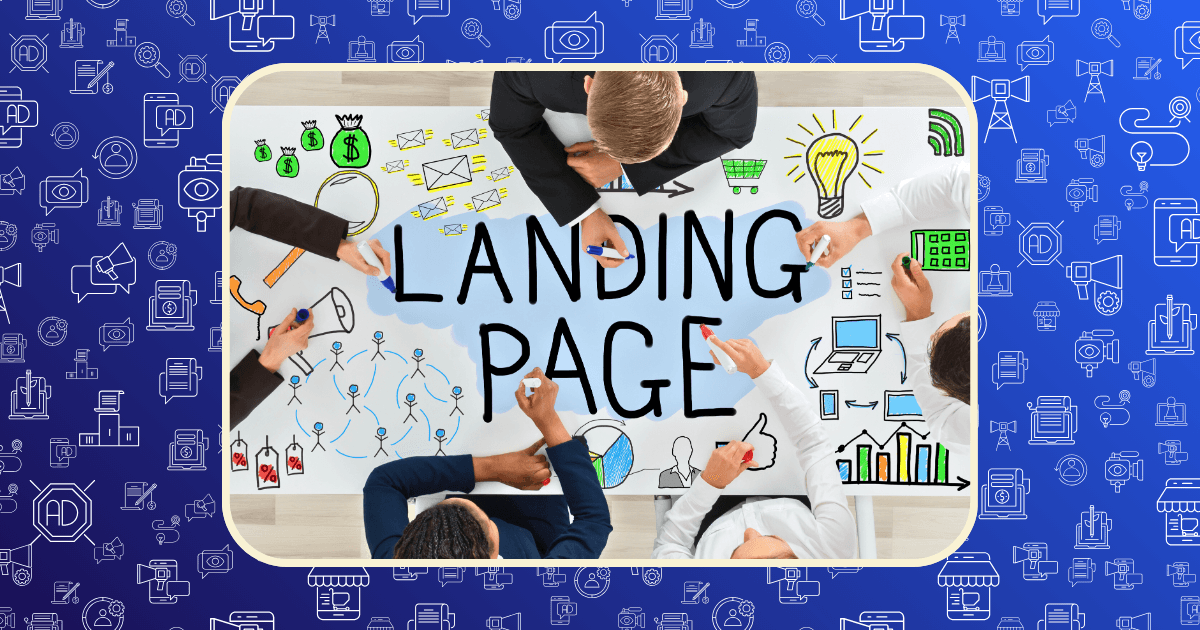
Step 6: Design Conversion-Focused Landing Pages

The most overlooked element of profitable campaigns is landing page alignment. For each ad group, ensure your landing pages:

  1. Maintain message match with ad copy
  2. Address the specific intent stage of the user
  3. Focus on a single conversion action
  4. Remove navigation and distractions
  5. Include social proof relevant to the specific offer

I’ve seen conversion rates increase by 37-142% simply by creating dedicated landing pages for high-value ad groups instead of sending traffic to general website pages.

Step 7: Implement Systematic Testing Protocol

Profitable campaigns aren’t built once—they’re continuously improved through structured testing:

  • Week 1-2: Ad copy testing (at least 3 variants per ad group)
  • Week 3-4: Landing page testing (headline and CTA variations)
  • Week 5-6: Bid strategy optimization
  • Week 7-8: Audience refinement and exclusions

Document each test with clear hypotheses and results to build your own playbook of what works in your specific industry.

Advanced Profit-Protection Tactics

Beyond the core structure, here are three advanced tactics I use to protect and enhance campaign profitability:

1. The Negative Keyword Tripwire System

Most advertisers add negative keywords reactively after wasting money. Instead, I implement a proactive tripwire system:

  1. Create a comprehensive negative keyword list before launching campaigns
  2. Review search terms daily for the first two weeks
  3. Implement tiered negative keyword lists at the campaign, ad group, and account levels

This system typically reduces wasted spend by 23-31% in the first month alone.

2. Dayparting Optimization Matrix

Rather than using simple day/time bid adjustments, I create a full dayparting matrix based on:

  • Conversion rate by hour and day
  • Cost per conversion by hour and day
  • Average order value by hour and day

This allows for more nuanced scheduling and bid adjustments that account for not just when people click, but when they actually convert at the best rates.

3. Profit-Based Attribution Modeling

Instead of relying on Google’s default attribution models, I build custom profit-based attribution that:

  • Assigns value based on actual margin contribution, not just conversion count
  • Accounts for offline conversions and phone calls
  • Adjusts for customer lifetime value differences between channels

This prevents the common mistake of optimizing for conversions that don’t actually generate profit.

Common Campaign Structure Mistakes to Avoid

Based on auditing hundreds of Google Ads accounts, here are the three most costly structural mistakes:

  1. Keyword Cannibalization: Having the same keywords competing across multiple campaigns, causing your own ads to compete against each other
  2. Budget Misallocation: Allocating equal budgets across campaigns rather than prioritizing based on profitability
  3. Conversion Tracking Gaps: Not tracking all conversion points or not assigning proper values to different conversion types

Each of these mistakes undermines profitability, regardless of how well your ads are written or how competitive your bids are.

Your Action Plan: Implementing the Profit-First Structure

If you’re starting fresh:

  1. Use a Google Ads Campaign Structure Template to map out your account
  2. Follow the 7-step process outlined above
  3. Allow 2-3 weeks of data collection before making major optimizations

If you’re restructuring an existing account:

  1. Create the new structure in parallel with your existing campaigns
  2. Gradually shift budget from old to new as performance data validates the approach
  3. Use campaign experiments to test structural changes before full implementation

Final Thoughts: Profitability Is Structural, Not Tactical

The most important lesson I’ve learned managing millions in ad spend is that profitability is primarily determined by structural decisions, not tactical optimizations.

While bid adjustments, ad testing, and audience refinement are important, they can only optimize what your campaign structure allows. Get the structure right first, and those optimizations will compound rather than compensate.

Leave a Reply

Your email address will not be published. Required fields are marked *