💰 Make Money Online
🤖 AI & Future Opportunities
✍️ Content & Audience Growth
📈 Marketing & Sales
🛠 Products & Services
🧠 Foundations & Mindset
🏆 Real-World Proof

💰 Make Money Online
🤖 AI & Future Opportunities
✍️ Content & Audience Growth
📈 Marketing & Sales
🛠 Products & Services
🧠 Foundations & Mindset
🏆 Real-World Proof

When I first began building my dividend portfolio in 2019, I tracked everything manually in a complex spreadsheet that required hours of maintenance each month. This inefficiency not only consumed valuable time but also limited my ability to make data-driven investment decisions. The turning point came when I discovered specialized dividend tracking apps—tools that transformed my approach to income investing.
Over the past year, I’ve conducted a systematic analysis of the seven leading dividend tracking applications, using each to monitor identical portfolios worth $100,000 spread across 30 dividend stocks. This head-to-head comparison revealed significant differences in functionality, insights, and value that could directly impact your investment returns.
Today, I’m sharing these findings to help you select the optimal tool for your dividend growth journey—one that not only tracks payments but provides the actionable insights needed to build a truly passive income machine.
Before diving into specific applications, it’s important to understand why specialized dividend tracking tools are worth considering in the first place.
As research from Hartford Funds has demonstrated, dividend-paying stocks have historically outperformed non-dividend payers by a significant margin. From 1973 to 2022, dividend payers in the S&P 500 delivered an average annual return of 9.17% versus 4.27% for non-payers.
However, maximizing this advantage requires more than simply buying dividend stocks. It demands strategic portfolio construction based on:
Generic investment apps typically fall short in these specialized areas, while dedicated dividend trackers provide the focused tools needed to optimize each aspect of income investing.
Beyond the technical advantages, there’s a powerful psychological benefit to properly tracking your dividend income. As behavioral finance research has shown, investors who regularly monitor concrete progress toward specific goals demonstrate greater discipline and commitment to their strategies.
By visualizing your growing dividend stream—rather than focusing solely on fluctuating portfolio values—you create a psychological anchor that helps maintain long-term perspective during market volatility. This mental shift from “paper wealth” to “income generation” can be transformative for investment behavior.
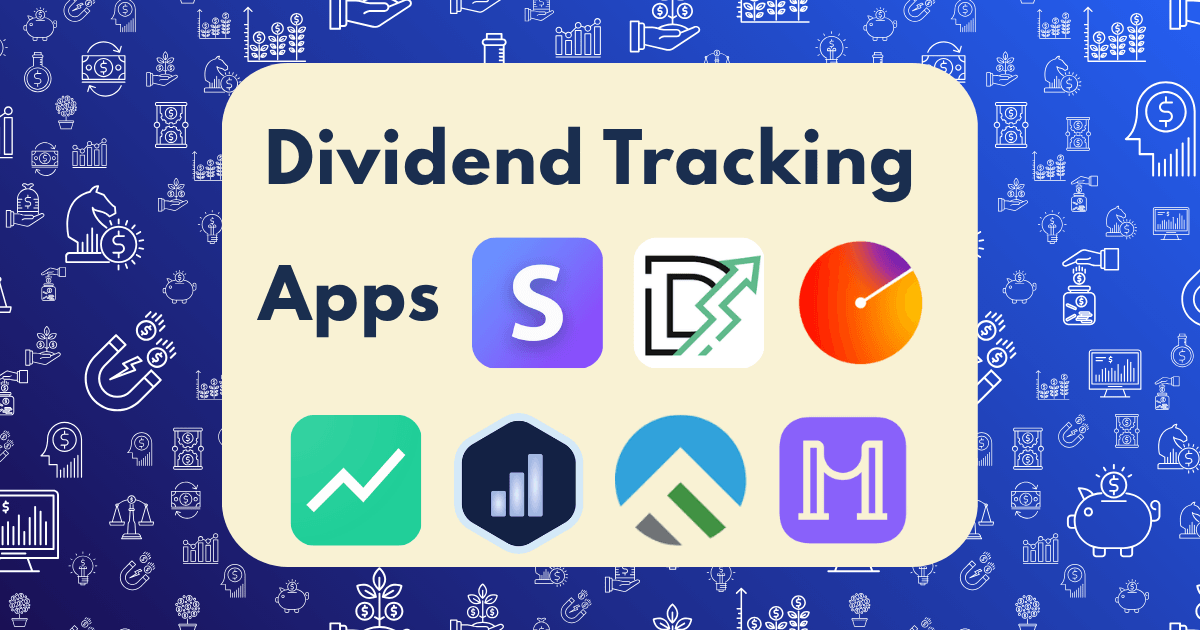
After extensive testing, these seven applications emerged as the leaders in dividend tracking, each with distinct strengths and limitations:
Key Features:
My Experience: Snowball Analytics provided the most comprehensive dividend analysis tools in my testing. Its Dividend Rating system proved remarkably predictive—flagging potential dividend cuts in two holdings (Intel and Walgreens) months before they were announced. The automatic broker integration worked flawlessly with my accounts at Fidelity, Vanguard, and M1 Finance.
Best For: Serious dividend investors managing portfolios across multiple brokerages who value in-depth analysis and future projections.
Limitations: The higher price point maydeter beginners, and some users report occasional sync issues with smaller brokerages.
Key Features:
My Experience: DivTracker offered the most seamless cross-device experience, with instant synchronization between my phone and laptop. The clean interface made quick portfolio check-ins effortless, and the dividend calendar integration with my phone’s calendar ensured I never missed an ex-dividend date.
Best For: Investors who frequently switch between devices and value simplicity and ease of use over advanced analytics.
Limitations: Lacks some of the deeper analytical tools found in Snowball Analytics, and broker integration is limited to major U.S. platforms.
Key Features:
My Experience: For my international dividend holdings, Sharesight was unmatched. It correctly calculated the impact of foreign withholding taxes on my Canadian and European dividends, and automatically converted all payments to USD for consistent reporting. The tax reports saved me hours during tax season.
Best For: Investors with multinational dividend portfolios, particularly those dealing with foreign tax considerations.
Limitations: Higher price point, and some users find the interface less intuitive than competitors.
Key Features:
My Experience: Stock Events delivered the best pure mobile experience, with an interface designed specifically for smaller screens. The push notifications for dividend announcements were consistently faster than other apps, often alerting me to increases within minutes of company announcements.
Best For: Mobile-first investors who primarily manage their portfolios from their phones and value real-time alerts.
Limitations: No web interface, and analytical tools are less robust than desktop-focused competitors.
Key Features:
My Experience: Track Your Dividends offered the most generous free tier, allowing me to track my entire portfolio without cost. The dividend safety scores generally aligned with more expensive competitors, though with less detailed explanation. The ad presence in the free version was noticeable but not intrusive.
Best For: Budget-conscious investors or beginners testing the waters of dividend tracking before committing to a paid solution.
Limitations: No mobile apps, limited broker integrations, and manual updates required for some data points.
Key Features:
My Experience: Capitally excelled at providing a holistic view of all income sources, not just dividends. I could track rental income, bond payments, and P2P lending returns alongside my dividend portfolio. The multi-year projections helped with retirement planning, showing expected income growth through 2030.
Best For: Investors with diverse income streams beyond dividends who want a consolidated view of all passive income sources.
Limitations: European focus may create some challenges for U.S. investors, and the web-only interface lacks mobile convenience.
Key Features:
My Experience: Mezzi’s AI capabilities delivered unique insights not available on other platforms. The system correctly identified potential dividend increases in my utilities holdings based on cash flow patterns, and the tax optimization suggestions helped me improve my portfolio’s tax efficiency by recommending strategic placement of certain holdings in tax-advantaged accounts.
Best For: Technologically-inclined investors interested in leveraging AI for dividend optimization and those seeking automated improvement suggestions.
Limitations: Newer platform with occasional bugs, and some AI recommendations require verification against other sources.
To facilitate direct comparison, I’ve evaluated each app across the seven most critical features for dividend investors:
| App | Broker Integration | Dividend Forecasting | Tax Reporting | Mobile Experience | Alerts & Notifications | Historical Data | Price (Monthly) |
| Snowball Analytics | Excellent (1000+ brokers) | 12-month forecast | Good | Good | Excellent | 5 years | $14.99 |
| DivTracker | Good (US focus) | Annual projection | Basic | Excellent | Excellent | 3 years | $6.99 |
| Sharesight | Very Good (International) | Next payment only | Excellent | Good | Good | 20 years | $24.00 |
| Stock Events | Limited | Basic annual | None | Excellent | Excellent | 2 years | $4.17 |
| Track Your Dividends | Limited | Annual projection | Basic | None | Good | 5 years | $9.99 |
| Capitally | Manual | Multi-year | Good | None | Limited | 10 years | $7.50 |
| Mezzi | Good | AI-enhanced | Excellent | Good | Very Good | 3 years | $9.99 |
Beyond tracking payments, these apps fundamentally improved my investment approach in several ways:
Snowball Analytics’ sector analysis revealed that I had inadvertently concentrated 42% of my portfolio in consumer staples, creating unnecessary sector risk. Using this insight, I rebalanced toward industrial and healthcare dividend payers, improving both my diversification and yield.
Mezzi’s calendar tools enabled me to implement a strategic dividend capture approach for a portion of my portfolio, increasing my annual income by approximately 0.7% with minimal additional risk.
Sharesight’s tax reporting identified several opportunities for tax-loss harvesting while maintaining my dividend income, saving approximately $1,200 in taxes last year.
DivTracker’s reinvestment analysis showed that my manual DRIP strategy was suboptimal. By switching to targeted reinvestment in my highest-growth dividend payers, I increased my projected 5-year income by 12%.
Snowball’s Dividend Rating system flagged potential sustainability issues in two holdings months before cuts were announced, allowing me to exit positions before the negative news impacted prices.
Perhaps the most valuable aspect of these tools was their impact on my investment psychology:
As research in financial psychology has demonstrated, these psychological factors often have a greater impact on long-term returns than marginal differences in portfolio composition.
Based on my testing, here are my recommendations for different investor profiles:
For Beginning Dividend Investors:
For Intermediate Dividend Investors:
For Advanced Dividend Investors:
For International Dividend Investors:
For Multi-Income Stream Investors:
To maximize the value of your chosen dividend tracking app, follow this implementation strategy:
Begin by importing at least two years of historical dividend data, either through:
This historical baseline is crucial for meaningful growth analysis and projections.
Once your data is imported, use the analytical tools to:
Document key insights and potential action items from this initial analysis.
Configure notification settings for:
These alerts will keep you informed without requiring constant portfolio monitoring.
Establish a consistent review cadence:
This disciplined approach prevents both neglect and obsessive checking.
As dividend investing continues to gain popularity in an uncertain economic environment, these specialized tracking tools will likely evolve with even more sophisticated features. Already, we’re seeing the integration of AI-powered analysis, enhanced tax optimization, and more seamless connections with brokerages.
For serious income investors, the question isn’t whether to use a dedicated dividend tracking app, but which one best aligns with your specific needs and investment style. The modest subscription cost of these platforms is easily justified by the improved decision-making, time savings, and potential tax advantages they provide.
Based on my comprehensive testing, Snowball Analytics offers the best overall value for serious dividend investors, with DivTracker providing an excellent balance of features and affordability for those with more modest portfolios.
Regardless of which tool you choose, the systematic tracking and analysis of your dividend income will provide both practical advantages and psychological benefits that can significantly enhance your journey toward financial independence through passive income.
Have you used any of these dividend tracking apps? What has your experience been? Share in the comments below.