💰 Make Money Online
🤖 AI & Future Opportunities
✍️ Content & Audience Growth
📈 Marketing & Sales
🛠 Products & Services
🧠 Foundations & Mindset
🏆 Real-World Proof

💰 Make Money Online
🤖 AI & Future Opportunities
✍️ Content & Audience Growth
📈 Marketing & Sales
🛠 Products & Services
🧠 Foundations & Mindset
🏆 Real-World Proof
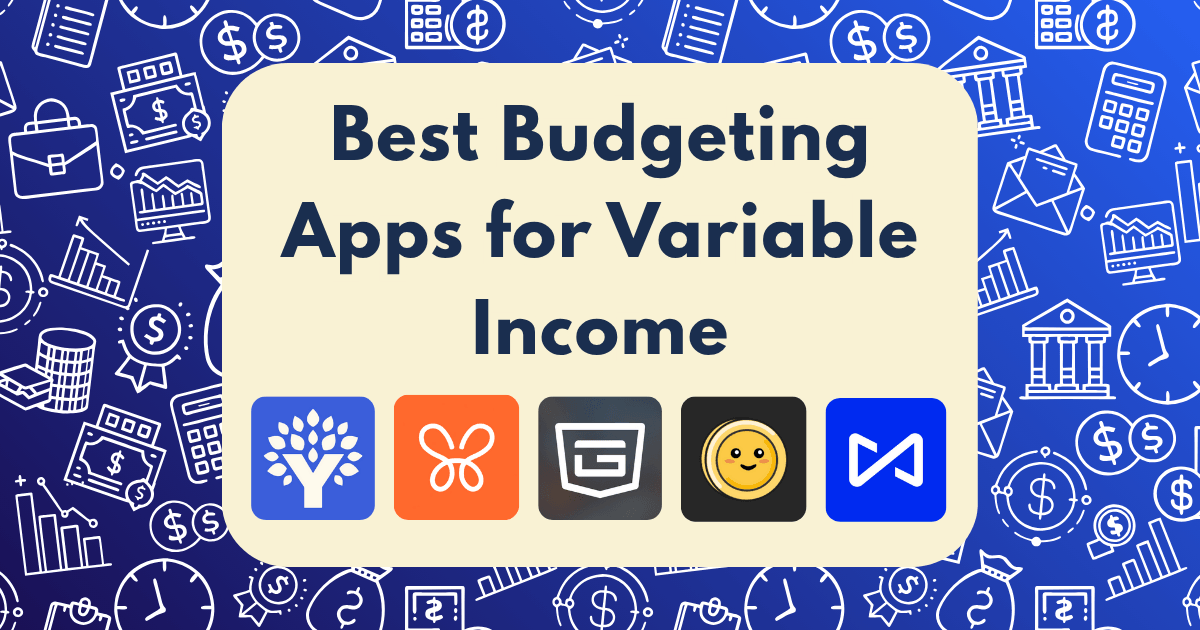
Managing finances with a steady paycheck is challenging enough. But when your income fluctuates month to month—as it does for most entrepreneurs, freelancers, and side-hustlers—traditional budgeting advice often falls short. One month you might earn twice your average, while the next brings in half, creating a financial roller coaster that standard budgeting apps struggle to handle.
According to market research, the budgeting software market for freelancers is projected to grow from $1.55 billion in 2024 to $1.66 billion in 2025, reflecting the increasing need for specialized financial tools among those with variable income.
But which apps actually deliver on their promises? To find out, I spent three months personally testing five of the most popular budgeting apps, specifically evaluating how well they handle the unique challenges of variable income. I tracked my own entrepreneurial earnings, expenses, and savings goals using each platform, and assessed them across several key criteria:
Here’s what I discovered in my hands-on testing, along with recommendations for which app might work best for your specific situation.
YNAB was designed with a philosophy that perfectly aligns with variable income challenges: “Give every dollar a job” and “Age your money.” These principles create a buffer between earning and spending that’s ideal for entrepreneurs with inconsistent cash flow.
My Testing Experience:
I began by importing three months of previous income and expense data to establish a baseline. YNAB’s onboarding was thorough but required a significant time investment—about 90 minutes to fully set up my budget categories and understand the system.
The standout feature for variable income was the ability to budget only the money I actually had, rather than forecasting with uncertain future income. This forced me to prioritize essential expenses and build a buffer for leaner months.
When I received a larger payment mid-month, YNAB made it easy to immediately allocate those funds across categories, including my tax savings account—a critical feature for self-employed individuals who don’t have taxes automatically withheld.
Variable Income Performance:
YNAB excels at variable income management through several key features:
During my testing period, I experienced a40% drop in income during the second month. YNAB’s system helped me adjust my discretionary spending accordingly without touching essential categories, demonstrating its flexibility for income fluctuations.
Pros
Cons
Best For:
YNAB is ideal for entrepreneurs who want a complete financial management system rather than just expense tracking. It works best for those willing to invest time upfront to learn the methodology, with significant payoff in financial stability.
Monarch Money offers a comprehensive financial dashboard that goes beyond basic budgeting to include investment tracking, net worth calculations, and financial goal planning—making it particularly valuable for entrepreneurs who need to see their complete financial picture.
My Testing Experience:
Setting up Monarch was straightforward, with an intuitive interface that required minimal learning. The account connection process was smooth for most of my accounts, though one smaller credit union required manual updating.
What impressed me most was Monarch’s customizable income categories. I created separate income streams for my main business, side projects, and investments, allowing me to track each revenue source independently—crucial for entrepreneurs with multiple income streams.
The “Spending Plan” feature was more flexible than traditional budgeting, allowing me to set target ranges rather than fixed amounts for variable expenses like client meals or marketing costs.
Variable Income Performance:
Monarch handles variable income through several thoughtful features:
During my testing, I appreciated Monarch’s ability to show me the bigger picture. When I had a particularly low-income month, seeing my overall net worth still trending upward provided valuable psychological reassurance.
Pros
Cons
Best For:
Monarch Money is perfect for established entrepreneurs who want a holistic view of their finances, including investments and net worth. It’s particularly valuable for those with multiple income streams or complex financial situations.
PocketGuard takes a simplified approach to budgeting with its core “In My Pocket” feature showing how much discretionary money remains after accounting for bills, goals, and necessities—a helpful metric for entrepreneurs needing to quickly assess their current spending capacity.
My Testing Experience:
PocketGuard had the fastest setup process of all apps tested, taking just under 30 minutes to connect accounts and establish basic categories. The free version provided sufficient functionality to test core features, though I upgraded to Plus to access custom categories and unlimited goals.
The “Insights” feature automatically identified patterns in my business spending, highlighting several subscription services I had forgotten about—immediately saving me $43 monthly by canceling unused tools.
For variable income, I found the “Income Rollover” feature (available in Plus) particularly useful, allowing me to carry excess income from high-earning months into leaner periods.
Variable Income Performance:
PocketGuard addresses variable income challenges through:
During testing, PocketGuard’s simplicity proved both a strength and limitation. When my income dropped unexpectedly, the app clearly showed me how much I needed to reduce discretionary spending, but offered fewer tools for strategic planning compared to YNAB or Monarch.
Pros
Cons
Best For:
PocketGuard is ideal for new entrepreneurs or side-hustlers who want a straightforward, affordable solution to track variable income and ensure bills are covered. It’s perfect for those who find other budgeting apps overwhelming or who are just starting to formalize their financial management.
Lunch Money stands out with its exceptional customization capabilities, allowing entrepreneurs to create a budgeting system that precisely matches their unique business and personal financial situations.
My Testing Experience:
Lunch Money’s setup process was moderately complex, taking about 60 minutes to fully configure. The web-first approach (rather than native mobile app) initially seemed limiting but ultimately provided more powerful customization options.
The standout feature for entrepreneurs was the multi-currency support and custom property tracking. As someone who occasionally earns in different currencies and tracks business assets, this level of detail was unmatched by other apps.
I particularly appreciated the developer’s regular updates and responsive support—when I suggested a feature to better track quarterly estimated tax payments, I received a thoughtful response within hours.
Variable Income Performance:
Lunch Money handles variable income through several sophisticated features:
During testing, I found Lunch Money’s customization particularly valuable for separating business and personal finances while still maintaining a comprehensive view of my overall financial health.
Pros
Cons
Best For:
Lunch Money is perfect for tech-savvy entrepreneurs who want granular control over their financial tracking and have specific requirements that other apps can’t accommodate. It’s especially valuable for those operating internationally or with complex business structures.
Albert differentiates itself by combining budgeting tools with access to human financial experts, offering personalized guidance for entrepreneurs facing complex financial decisions.
My Testing Experience:
Albert’s setup was straightforward, with an AI-driven approach that suggested budget categories based on my spending patterns. The “Genius” feature—access to financial experts via text message—was the most distinctive element of my testing experience.
When I messaged asking about strategies for managing irregular income, I received a detailed response within 4 hours, including specific recommendations for building an income stabilization fund and tax allocation percentages based on my business type.
The automated savings feature, which analyzes income patterns and sets aside small amounts when affordable, accumulated $340 during my three-month test without ever leaving me short for bills.
Variable Income Performance:
Albert addresses variable income through several unique approaches:
During testing, Albert’s combination of automation and human guidance proved valuable during a month when I needed to make decisions about reinvesting in my business versus building my emergency fund.
Pros
Cons
Best For:
Albert is ideal for early-stage entrepreneurs who want guidance along with budgeting tools. It’s particularly valuable for those who would benefit from personalized financial advice but aren’t ready to hire a financial planner.
After three months of testing, it’s clear that different apps excel for different entrepreneurial situations. Here’s a comparative breakdown to help you find your match:
Regardless of which app you choose, these strategies will help you maximize its effectiveness for managing variable income:
Allocate a percentage of each payment (I recommend 10-20%) to a separate “Income Stabilization” category or account. This buffer becomes your personal unemployment insurance during lean months.
For essential expenses, budget based on your “floor” income—what you can reliably earn even in your worst months. This creates a sustainable baseline while treating higher-earning periods as opportunities for additional savings or business investment.
Rather than fixed dollar amounts, allocate income by percentages:
Even with integrated apps, maintain separate accounts for business and personal use. This simplifies tax preparation and provides clearer insights into business profitability.
Set calendar reminders for weekly quick-checks (15 minutes) and monthly deep reviews (1 hour) of your finances. Consistency matters more than the specific app you choose.
After three months of testing, I’ve personally continued using YNAB for my variable income management. While it required the steepest learning curve, its methodology fundamentally changed my relationship with irregular income, transforming it from a source of stress to a manageable system.
However, the “best” app truly depends on your specific situation:
Remember that the perfect app is the one you’ll actually use consistently. Most offer free trials, so I encourage you to experiment with at least two options before committing.
While the right budgeting app can transform how you manage variable income, true financial stability for entrepreneurs comes from combining technological tools with fundamental principles:
The entrepreneurial journey comes with inherent financial uncertainty, but with the right tools and strategies, you can create stability amid the fluctuations. A good budgeting app doesn’t eliminate the variability of entrepreneurial income—it helps you thrive despite it.
What budgeting strategies have worked best for your variable income? Have you tried any of these apps with different results? Share your experiences in the comments below.